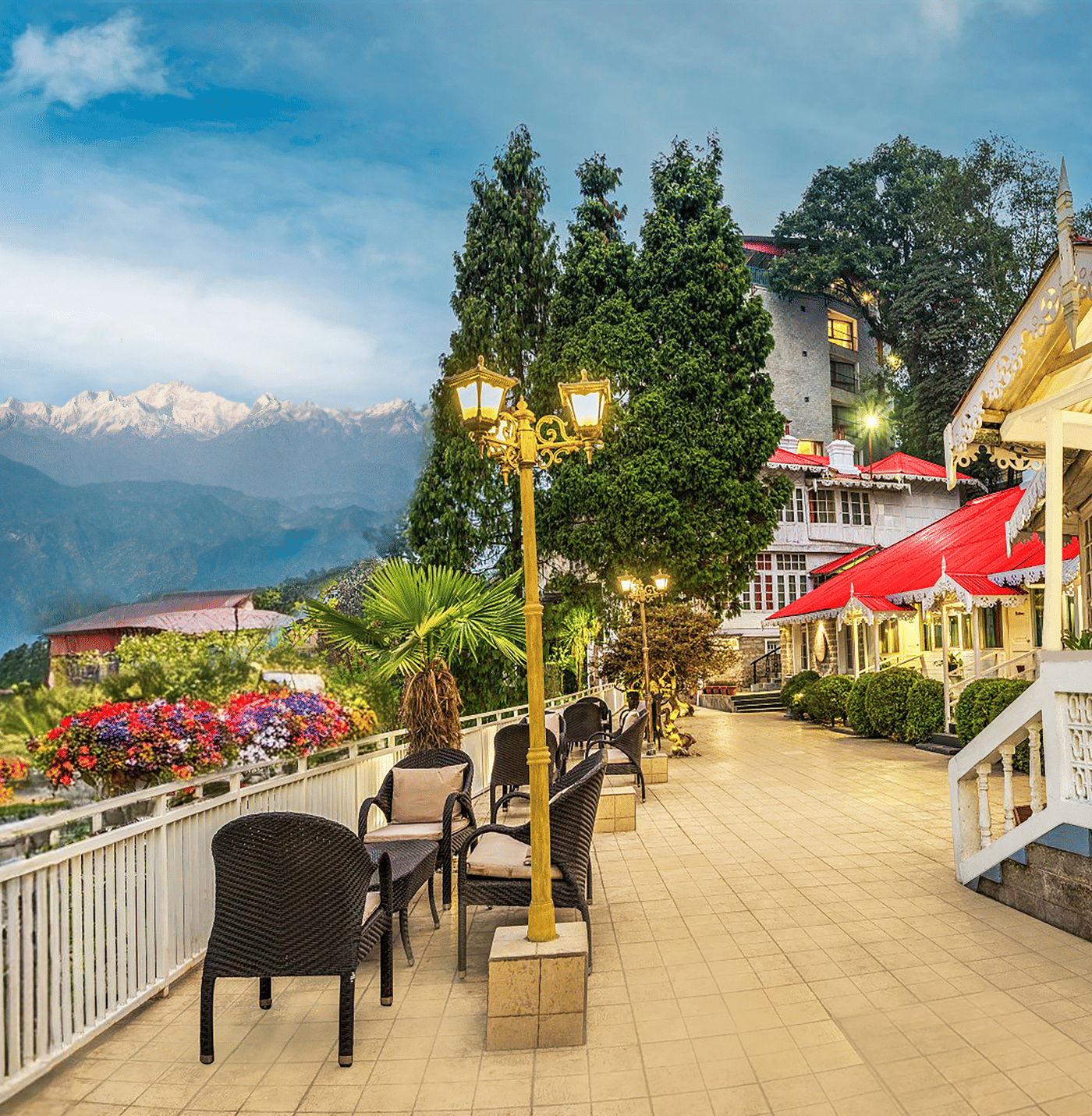
In an interaction with BW Hotelier, Summit Hotels & Resorts discusses the evolving landscape of hill hospitality in India and the company’s structured approach to sustainable growth across key mountain destinations.
_
India’s hill destinations have long attracted leisure travellers, but the hospitality landscape across the Himalayan belt has remained uneven. While demand has steadily grown, especially among domestic travellers seeking short breaks and Nature-led travel, supply in many regions has been dominated by small, independent hotels with limited systems, inconsistent service standards and low digital visibility. Across the Himalayan belt, demand has grown steadily, but service standards, safety protocols and quality inventory have often struggled to keep pace. This gap between demand and dependable mid-scale accommodation has shaped the opportunity for destination-based hotel operators that understand both terrain and traveller behaviour.
Summit Hotels & Resorts has emerged as one of the few Indian brands to institutionalise hill hospitality by building scale, structure and consistency across some of the country’s most challenging yet high-potential leisure markets. Today, the brand operates a network of over 20 hotels, largely concentrated in the Himalayan arc, where it has developed operational depth that few organised midscale players possess.
Defining the Himalayan arc as a core strategy
According to Sumit Mitruka, Founder and CEO, Summit Hotels & Resorts, the brand’s strong association with the Himalayan belt is rooted in operational learning rather than surface-level positioning. “Our long-term focus on the Himalayan arc stems from operational familiarity and market opportunity rather than branding alone. The region has steady leisure demand, strong drive-to traffic, and historically limited presence of organised mid-scale chains,” he says.
Summit began operations in Gangtok in 2009 and gradually built expertise in managing high-altitude hotels, seasonal swings and workforce availability. Over time, this translated into a competitive advantage over later entrants. By expanding across North Bengal, Sikkim, Assam, Meghalaya, Uttarakhand, Himachal and Goa, the company focused on regional density rather than scattered national growth. “The vision is to act as a stabilising, structured operator in hill markets where supply is fragmented, and service standards vary,” explains Mitruka, positioning Summit as part of the broader Himalayan tourism ecosystem rather than a standalone chain.
Creating a connected Himalayan travel corridor
Today, Summit operates more than 20 hotels across key hill destinations, allowing it to function as an integrated travel circuit. “This network also supports destination stability by balancing demand across microclimates and seasons. Centralised distribution, shared sales channels and revenue systems introduce organised supply into markets with limited chain presence, indirectly strengthening tourism infrastructure,” the founder notes. The model also allows demand to be balanced across destinations and seasons. The presence of meeting and small event spaces at select hill properties adds commercial depth, enabling destinations to attract non-leisure demand and function more cohesively as a tourism corridor.
Addressing structural gaps in hill markets
Many hill markets in the Eastern Himalayas and the Northeast continue to suffer from under-leveraged hospitality assets. Independent hotels often lack trained manpower, consistent upkeep and digital reach, limiting their appeal to travellers who value reliability. To which Mitruka adds, “Summit’s operating model introduces structured systems – revenue management, procurement, training and hygiene standards, along with adaptive digital marketing that helps properties reach the right traveller segments – that independent properties often cannot implement on their own.”
Expansion into destinations such as Lachen, Lachung, Sandakphu and Kaziranga increases organised room supply in markets where quality inventory is limited. Positioned between budget hotels and a small number of luxury properties, “Its mid-to-premium positioning fills the gap between budget hotels and a few luxury properties, while circuit-based operations help stabilise seasonality. These interventions address key issues of quality, consistency and market access,” he adds.
Managed growth and outcomes
A key pillar of Summit’s expansion is its partnership-driven model. Through leased, managed and hybrid formats, local hotel owners retain asset ownership while gaining access to chain-level systems and brand visibility. Centralised revenue management, OTA partnerships and a growing direct booking engine help improve occupancy, particularly during off-peak periods. Standardised training and procurement reduce inefficiencies that often affect independent hotels.
Success is tracked through clear performance metrics. “Partnership success is measured through occupancy improvements, portfolio average 65-70 per cent, ADR stability, GOP margins and enhanced online ratings compared to pre-takeover performance,” Mitruka says. With many properties acquired as underperforming assets, gains are evaluated against previous performance and regional benchmarks, offering owners a structured route to profitability without heavy capital investment.
Sustainability and community participation
Operating in environmentally sensitive regions requires practical, day-to-day sustainability measures. The founder says, "Summit emphasises on operational sustainability such as reducing single-use plastic, adopting biodegradable alternatives, and using energy-efficient fixtures". Landscaping in hilly areas is planned to reduce erosion and manage water flow, which is essential for destinations prone to landslides or heavy rainfall. "These are practical, incremental measures embedded within daily operations rather than separate sustainability programmes," he notes.
The brand is also transitioning towards paperless operations, including digital check-ins, e-billing and digital guest information. Community inclusion remains central to operations. “With a workforce of over 1,000 people, many roles – from service staff to guides and transport partners – are filled locally, supporting regional livelihoods,” he says. Local sourcing and cultural experiences are integrated into the guest offering, strengthening the link between hotels and destination economies.
Expanding without diluting identity
As Summit expands beyond its eastern stronghold into Uttarakhand, Himachal, Odisha and additional Northeastern destinations, maintaining brand authenticity remains a priority. Consistency is driven through SOPs, safety practices and training systems, while design and experiences are adapted locally. “These core elements ensure a predictable guest experience irrespective of geography. However, product design is adapted to local architectural styles, cuisine and cultural context rather than following a fixed template,” Mitruka explains.
Planned sub-brands, including premium staycation and vegetarian-centric verticals, are intended to support diversification without diluting the core mid-scale identity.
Outlook towards 2030
Looking ahead, Summit aims to scale to around 50 properties by 2030, with a clear focus on Himalayan, temple-town and nature-driven markets. Digitally, the emphasis is on reducing OTA dependency, growing direct bookings and launching a loyalty programme. “Sub-brand development supports portfolio segmentation. In the broader Himalayan context, we aim to contribute to organised hospitality by improving workforce training, operational consistency and accessible mid-scale supply across remote and emerging hill destinations,” he concludes.
As hill tourism in India matures from seasonal travel to a year-round economic driver, the role of organised mid-scale hospitality is becoming increasingly central. Summit Hotels & Resorts has built relevance by combining regional depth with operational discipline, addressing long-standing gaps in quality, consistency and access across Himalayan destinations.
Updated on Jan 21, 2026
Source https://www.bwhotelier.com/article/building-order-in-india-s-hill-hospitality-590147